

Entering the Saudi Arabian Market: A Guide for European Companies
Entering the Saudi Arabian market offers European companies opportunities in industrial equipment, construction, technology, healthcare, energy, food, and consumer products. Saudi Arabia's economic diversification and infrastructure development are creating demand for international expertise, innovative products, and reliable suppliers.
However, entering the market successfully requires a clear strategy, an understanding of local regulations, and strong business relationships.

1. Research Market Demand
Before entering Saudi Arabia, identify your target customers and assess demand for your product or service.
Research:
Local competitors and pricing
Customer needs
Industry growth
Distribution channels
Relevant opportunities linked to Vision 2030
Focus on a specific industry or customer segment instead of targeting the entire market at once.
2. Understand Regulations and Compliance
Depending on the product, Saudi Arabia may require registration, conformity assessment, import approvals, or specific labeling.
European exporters should investigate:
Applicable product standards
Saudi conformity requirements
Product registration procedures
Arabic labeling requirements
Customs documentation
Sector-specific licenses
For regulated products, such as food, medical devices, and cosmetics, requirements may differ significantly. Confirm the rules with the relevant Saudi authorities before shipping.

3. Find a Reliable Local Partner
A qualified Saudi distributor, importer, or commercial partner can help your company understand the market, reach customers, and navigate local business practices.
Evaluate potential partners based on:
Industry experience
Customer network
Financial stability
Regulatory knowledge
Sales and distribution capabilities
After-sales support
Verify company information and agree on clear commercial responsibilities before signing a partnership contract.
4. Develop a Competitive Pricing Strategy
Your pricing should reflect both local market conditions and the complete cost of doing business in Saudi Arabia.
Include:
Manufacturing costs
International freight and insurance
Customs duties and applicable taxes
Product registration and compliance costs
Distributor margins
Warehousing and delivery
Marketing and customer support
A competitive price must also preserve your profit margin and support long-term growth.
5. Plan Logistics and Distribution
Saudi Arabia's size makes distribution planning especially important. Choose shipping routes, warehouses, and delivery partners according to your customers' locations.
Before shipping, confirm documentation requirements, customs procedures, packaging standards, and delivery responsibilities. Suitable Incoterms can clarify which party manages transportation, insurance, and delivery risks.
For industrial equipment, reliable installation, maintenance, and spare-parts availability can also strengthen your market position.
6. Adapt to Local Business Culture
Trust and professional relationships are important in Saudi business. Keep communication respectful, consistent, and responsive.
European companies should:
Prepare thoroughly for meetings
Understand local business etiquette
Provide clear technical and commercial information
Respond promptly to requests
Build relationships over time
Local knowledge and cultural awareness can improve negotiations and partnership development.
7. Start Small and Expand Strategically
Instead of making a large commitment immediately, test your strategy through a pilot project, limited distribution agreement, or selected customer segment.
Track sales, customer feedback, delivery performance, and partner effectiveness. Use these results to refine your approach before expanding across additional regions or product categories.
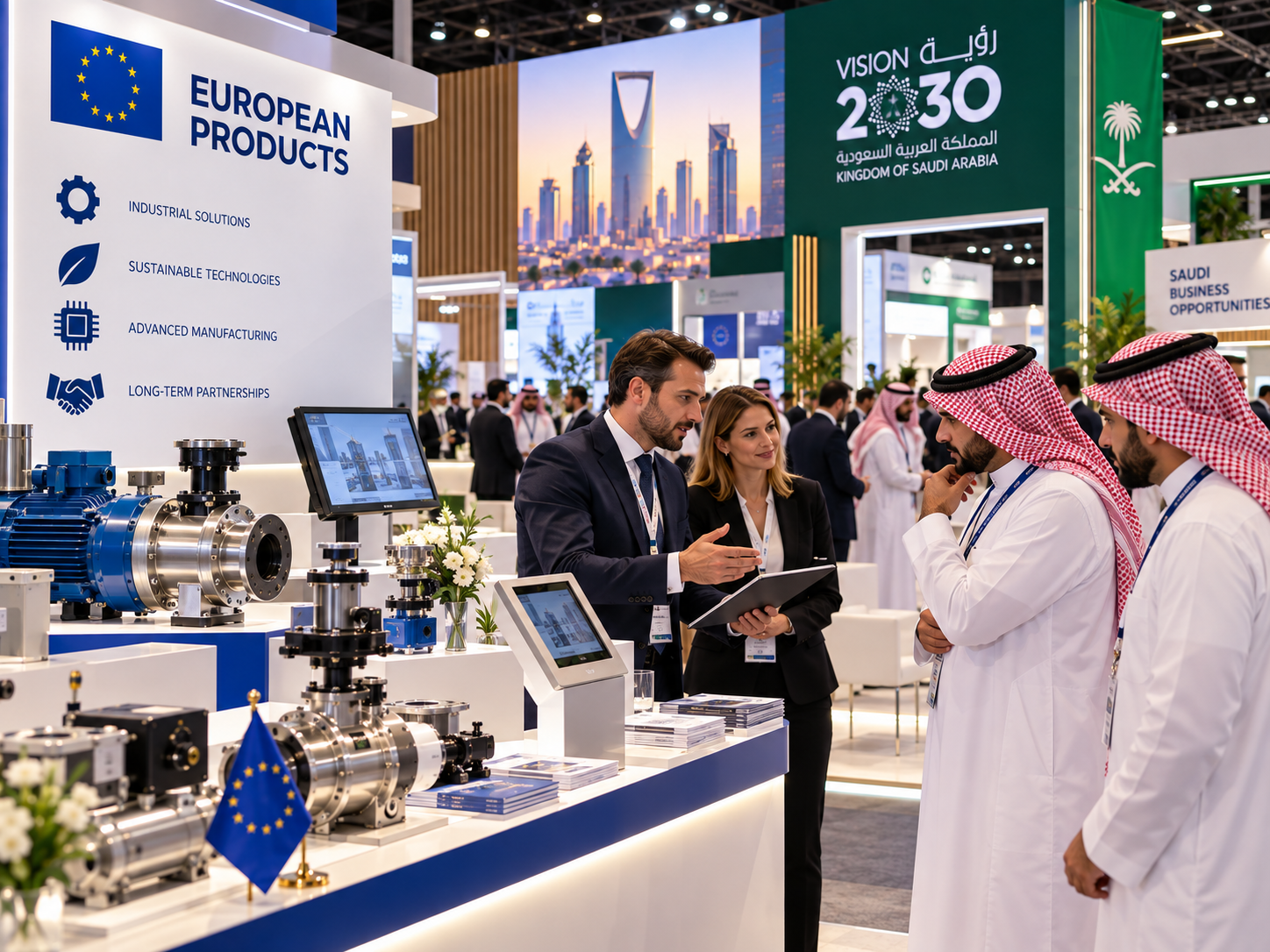
[Suggested Image: European and Saudi business representatives reviewing a distribution plan]
Enter the Saudi Arabian Market With Capella Austria
Saudi Arabia offers significant opportunities for European businesses, but sustainable growth depends on market research, compliance, trusted partnerships, and reliable execution.
Capella Austria can support companies with international sourcing, partner identification, market research, and cross-border business coordination to help them evaluate opportunities and develop their Saudi market-entry strategy.
Frequently Asked Questions
Why should European companies consider Saudi Arabia?
Saudi Arabia offers opportunities in sectors including infrastructure, energy, healthcare, technology, industrial equipment, and consumer products.
What is the first step in entering the Saudi market?
Start by researching demand, competitors, regulations, customer segments, and potential distribution partners.
Are European products required to meet Saudi standards?
Applicable requirements depend on the product. Some goods need conformity assessments, registrations, or specific certifications before import.
Is Arabic labeling necessary?
Arabic labeling may be required for certain product categories. Check the rules that apply to the specific product.
Do European companies need a local distributor?
Not always, but a qualified local partner can help with distribution, customer access, and market knowledge.
What is Vision 2030?
Vision 2030 is Saudi Arabia's national transformation strategy, supporting economic diversification and development across multiple sectors.
How can companies find business partners in Saudi Arabia?
Companies can use trade fairs, industry networks, business associations, professional research, and targeted outreach.
How can export risks be reduced?
Verify partners, confirm regulatory requirements, use written contracts, and carefully plan logistics and payment arrangements.
How long does market entry take?
The timeline depends on the industry, product approvals, business model, and partner selection. Regulated products may require additional preparation.
Can Capella Austria help with Saudi market entry?
Capella Austria can support businesses with market research, partner identification, sourcing, and international business coordination.