

What Information Do You Need Before Requesting a Quote from a Foreign Supplier?
To request a quote from a foreign supplier effectively, buyers should provide clear information about the product, quantity, technical requirements, delivery location, and commercial conditions. A detailed request helps suppliers prepare accurate quotations and makes it easier to compare different offers.
An incomplete request can lead to unclear prices, incorrect specifications, or unexpected costs later.
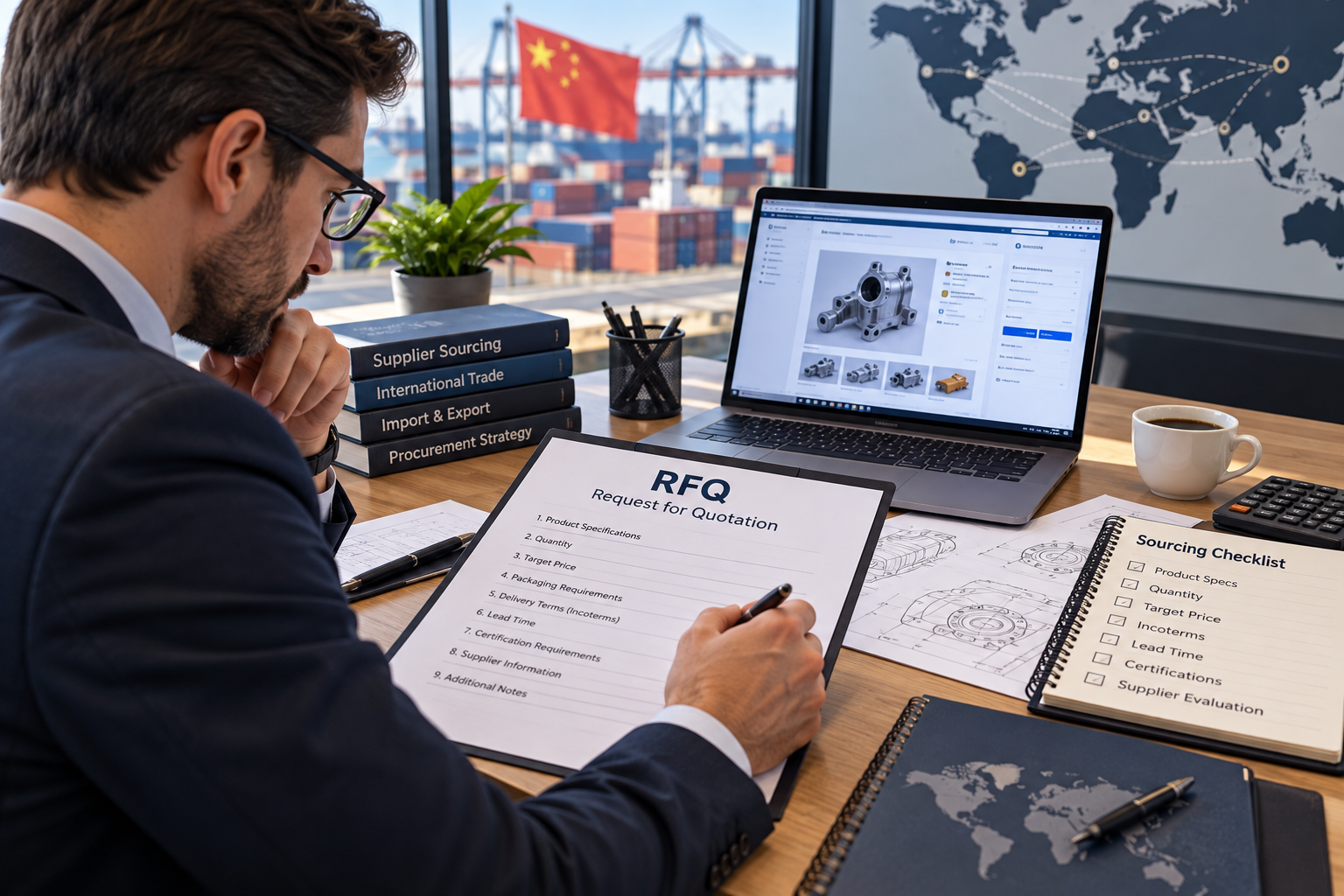
1. Define the Exact Product
Start by clearly describing what you want to purchase.
Include:
Product name and model
 Technical specifications
Materials
Dimensions
Required quality
Brand or equivalent options
Product images or drawings, if available
For industrial products, technical drawings and specifications can be especially important.
2. Specify the Required Quantity
Suppliers need to know how much you intend to purchase.
Provide:
Initial order quantity
Expected annual volume, if relevant
Number of units
Packaging requirements
Ask about the supplier's MOQ (Minimum Order Quantity) if you are unsure about the appropriate order size.

3. State Your Quality and Certification Requirements
If the product must comply with specific standards, mention them before requesting the quotation.
Depending on the product and destination, you may need:
CE or other applicable certifications
Technical documentation
Test reports
Safety standards
Quality specifications
Country-specific compliance requirements
This prevents suppliers from quoting products that cannot be legally or technically imported.
4. Provide the Delivery Location
The supplier needs to know where the goods will be delivered.
Provide the destination country and, when appropriate, the city, port, or warehouse location.
You should also specify your preferred Incoterm, such as EXW, FOB, CIF, or DAP, if you understand which one suits your transaction.
This makes transportation and logistics costs easier to calculate.
5. Clarify Your Desired Delivery Time
Tell the supplier when you need the goods.
Ask about:
Production lead time
Ready-to-ship availability
Estimated transit time
Earliest possible delivery date
If your order is time-sensitive, communicate the deadline clearly before receiving the quotation.

6. Define Packaging Requirements
Packaging can affect both product safety and transportation costs.
Specify whether you require:
Standard or export packaging
Pallets
Wooden crates
Special protection
Product labeling
Private labeling or custom packaging
For fragile or industrial equipment, packaging requirements should be particularly detailed.
7. Clarify Payment Requirements
If you have preferred payment conditions, communicate them during the quotation process.
Ask about:
Accepted currencies
Deposit requirements
Balance payment
Payment methods
Credit terms, if available
For new suppliers, payment arrangements should be agreed only after verifying the supplier and reviewing the commercial contract.
8. Ask for a Complete Commercial Quotation
A professional RFQ should request more than just the unit price.
Ask the supplier to provide:
Unit price
MOQ
Production time
Packaging costs
Shipping options
Payment terms
Warranty
Quote validity period
Applicable taxes or additional charges
This allows you to compare suppliers based on the total purchasing cost, rather than price alone.
Make Your International Purchasing More Efficient With Capella Austria
A well-prepared request for quotation can save time, reduce misunderstandings, and produce more accurate supplier offers.
Capella Austria can support businesses with international sourcing, supplier communication, quotation evaluation, and purchasing coordination, helping companies approach foreign suppliers with clearer requirements and stronger commercial preparation.
Frequently Asked Questions
What should I include in an RFQ?
Include product specifications, quantity, quality requirements, delivery location, timeline, packaging, certifications, and commercial requirements.
Why is product specification important?
Clear specifications prevent suppliers from quoting products that do not meet your technical or quality requirements.
Should I mention my target price?
It depends on your negotiation strategy. You can request market-based quotations first and compare offers before discussing a target price.
What is MOQ?
MOQ means Minimum Order Quantity—the smallest quantity a supplier is willing to sell under specified conditions.
Should I request shipping costs?
Yes. Ask for shipping options and costs so you can calculate the complete purchasing cost.
What is an Incoterm?
Incoterms define important responsibilities between buyer and seller regarding delivery, transportation, insurance, and risk.
How many suppliers should I contact?
For important purchases, requesting quotations from several qualified suppliers can help you compare prices, terms, capabilities, and lead times.
Should I request samples before ordering?
For many products, especially new supplier relationships, samples can help verify quality before placing a larger order.
How long should a quotation remain valid?
Ask the supplier to state the quotation's validity period because prices, freight costs, and currency rates can change.
Can Capella Austria help evaluate supplier quotations?
Yes. Capella Austria can assist businesses with supplier communication, quotation comparison, sourcing, and international purchasing coordination.