
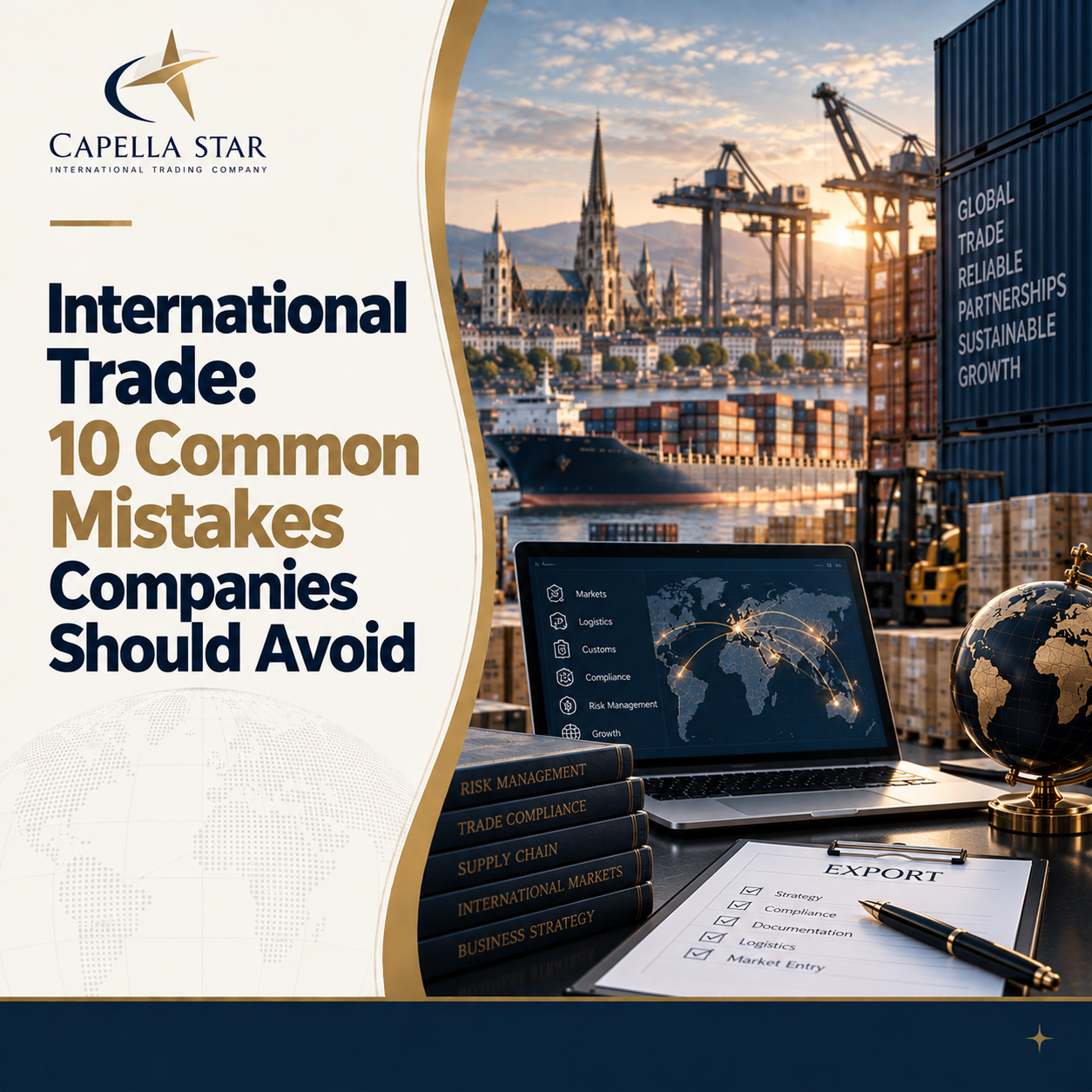
10 Common Mistakes Companies Make in International Trade
International trade can help companies reach new customers, increase sales, and expand into promising foreign markets. However, international business also involves customs requirements, different regulations, unfamiliar markets, logistics challenges, currency risks, and cultural differences.
Many problems can be avoided with better preparation. Here are 10 common mistakes companies should consider before entering or expanding in international markets.
[Image suggestion: Business team reviewing an international trade strategy with a world map and shipping containers in the background]
1. Entering a Market Without Proper Research
One of the most common mistakes is choosing a foreign market based on assumptions rather than evidence.
A country may have a large population or strong economy but still have limited demand for a particular product. Businesses should research customer needs, competitors, prices, regulations, purchasing behavior, and market potential before investing.
2. Ignoring Local Regulations
Every market has its own rules. Product standards, certifications, labeling requirements, import restrictions, and licensing obligations can vary significantly.
Failing to check these requirements before shipping can result in delays, additional costs, rejected shipments, or other compliance problems.
[Image suggestion: Export documents and customs paperwork being reviewed by a business professional]
3. Using Incorrect Customs Classification
Products need to be classified correctly for customs purposes. An incorrect tariff classification can affect duties, documentation, restrictions, and customs processing.
Companies should verify the appropriate classification rather than relying on assumptions or copying information from an unrelated shipment.
4. Preparing Incomplete Documentation
International shipments often require more documentation than domestic transactions.
Depending on the product and destination, businesses may need commercial invoices, packing lists, transport documents, certificates of origin, licenses, or other certificates.
Information should be accurate and consistent across all documents.
5. Choosing the Wrong International Trade Terms
Commercial terms determine important responsibilities between the buyer and seller.
Incoterms® help clarify matters such as transportation responsibilities, costs, and the transfer of certain risks. Selecting a term without understanding its implications can create disputes or unexpected expenses.
Both parties should clearly understand the agreed delivery terms before the transaction begins.
6. Underestimating Logistics Costs
A product that is profitable domestically may become far less profitable internationally.
Companies need to consider transportation, insurance, warehousing, customs duties, taxes, handling charges, and local distribution costs.
[Image suggestion: Cargo ship, containers, trucks, and a logistics planning screen showing an international shipment]
Calculating the complete landed cost before agreeing on a price can prevent unpleasant surprises.
7. Choosing Partners Without Due Diligence
A foreign distributor, supplier, agent, or customer can have a major impact on the success of an international operation.
Companies should investigate potential partners' reputation, experience, financial reliability, market presence, and references before entering important commercial relationships.
A strong contract should also clearly define responsibilities, payment terms, territories, delivery conditions, and dispute procedures.
8. Neglecting Currency and Payment Risks
Currency fluctuations can affect the final value of an international transaction.
Payment risk is another concern, particularly when working with an unfamiliar customer. Businesses should carefully consider payment methods, currencies, credit terms, and appropriate protections before completing a transaction.
For larger or higher-risk deals, professional financial advice may be appropriate.
9. Assuming the Domestic Strategy Will Work Abroad
A product and marketing approach that succeeds in one country may not produce the same results elsewhere.
Language, culture, customer expectations, purchasing habits, packaging, pricing, and communication styles can differ considerably.
Successful international businesses adapt their approach while maintaining a consistent and credible brand.
[Image suggestion: International business meeting between European and foreign business partners]
10. Expanding Too Quickly
International expansion does not need to happen in many countries at once.
Entering several unfamiliar markets simultaneously can stretch finances, staff, supply chains, and management resources. A more controlled approach is to test one or a few promising markets, learn from the results, and expand gradually.
Growth should follow the company's ability to serve customers reliably.
How to Avoid These International Trade Mistakes
A practical international trade plan should cover five essential areas:
Market: Is there genuine demand?
Compliance: Can the product legally enter the market?
Costs: Is the transaction financially viable?
Logistics: Can the goods reach customers reliably?
Partners: Are buyers, suppliers, and distributors trustworthy?
Reviewing these areas before signing a contract or shipping products can significantly reduce avoidable problems.
[Image suggestion: International trade checklist beside a laptop, globe, documents, and cargo containers]
Build a More Reliable International Trade Strategy With Capella Austria
Avoiding common mistakes starts with informed decisions and reliable international business relationships. Companies considering new markets should evaluate commercial opportunities carefully before committing significant resources.
Visit Capella Austria to learn more about its international business activities and explore potential opportunities for cross-border cooperation.
International expansion can be rewarding, but successful companies do not treat foreign markets like an extension of their domestic market. They research, plan, verify, and adapt before making major commitments.
Frequently Asked Questions
What is the biggest mistake in international trade?
Entering a foreign market without sufficient research is one of the most damaging mistakes because it can lead to weak demand, poor pricing, or unexpected regulatory problems.
Why is customs classification important?
Correct classification helps determine applicable customs requirements and can affect duties, documentation, and import or export procedures.
What documents are commonly needed for international shipments?
Depending on the transaction, businesses may need commercial invoices, packing lists, transport documents, certificates of origin, licenses, and product-specific certificates.
How can companies reduce international payment risks?
Businesses can assess customers carefully, choose appropriate payment methods, establish clear contractual terms, and use suitable financial protections where necessary.
Should companies enter several foreign markets at once?
Usually, a gradual approach is easier to manage. Testing one or a few markets can help a company learn before committing substantial resources.
Why do international shipping costs cause problems?
Companies sometimes focus only on the product price and overlook freight, insurance, customs, handling, taxes, and distribution expenses.
Is a local distributor always necessary?
No. Some companies can sell directly, while others benefit from local distributors because of their existing networks and market knowledge.
How important are Incoterms®?
They are important because they help define certain responsibilities, costs, and risks between buyers and sellers in international transactions.
Can a successful domestic product fail internationally?
Yes. Customer preferences, competition, regulations, pricing, culture, and purchasing behavior can be very different in another market.
How can a company prepare for international expansion?
Start with market research, verify regulatory requirements, calculate total costs, establish reliable logistics, evaluate partners, and create a realistic market-entry plan.