
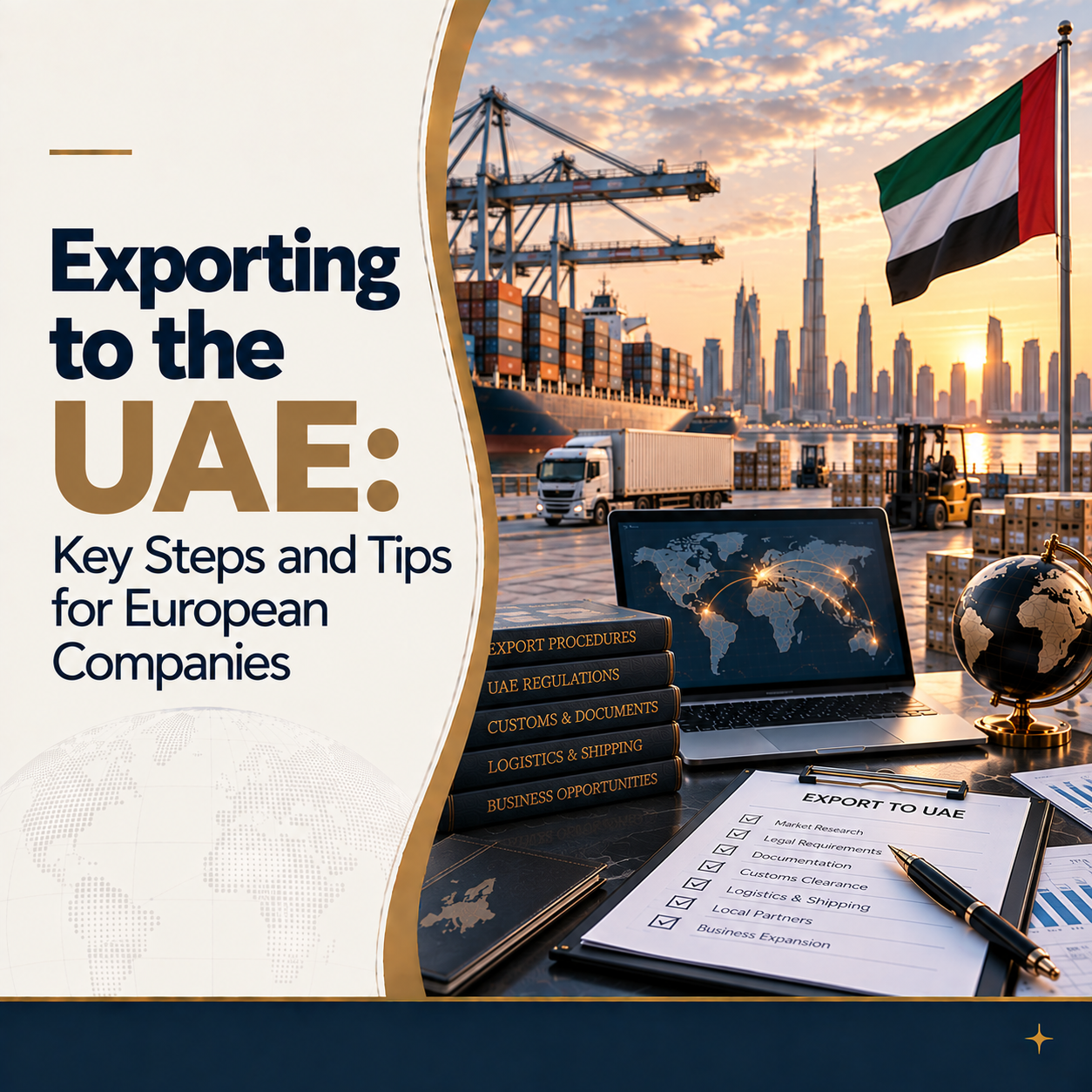
Exporting to the UAE: Key Steps and Tips for European Companies
Exporting to the UAE can provide European companies with access to a dynamic international market and a strategic gateway to the wider Gulf region. The UAE has strong logistics infrastructure, established trade networks, and demand across industrial, consumer, healthcare, technology, and luxury sectors.
However, successful market entry requires careful preparation, regulatory compliance, reliable logistics, and the right local partners.

1. Research the UAE Market
Before exporting, determine whether demand for your product is strong enough.
Analyze:
Target customers
Local competitors
Market prices
Distribution channels
Customer preferences
Potential business partners
The UAE market is diverse, so defining a specific customer segment can make market entry more effective.
2. Check Import and Product Requirements
European exporters should determine whether their products require specific registrations, certifications, approvals, or labeling before shipment.
Depending on the product category, requirements may include:
Product certifications
Safety documentation
Technical specifications
Arabic labeling
Certificates of origin
Commercial invoices
Packing lists
Requirements can differ by product and emirate, so verify the rules that apply before shipping.
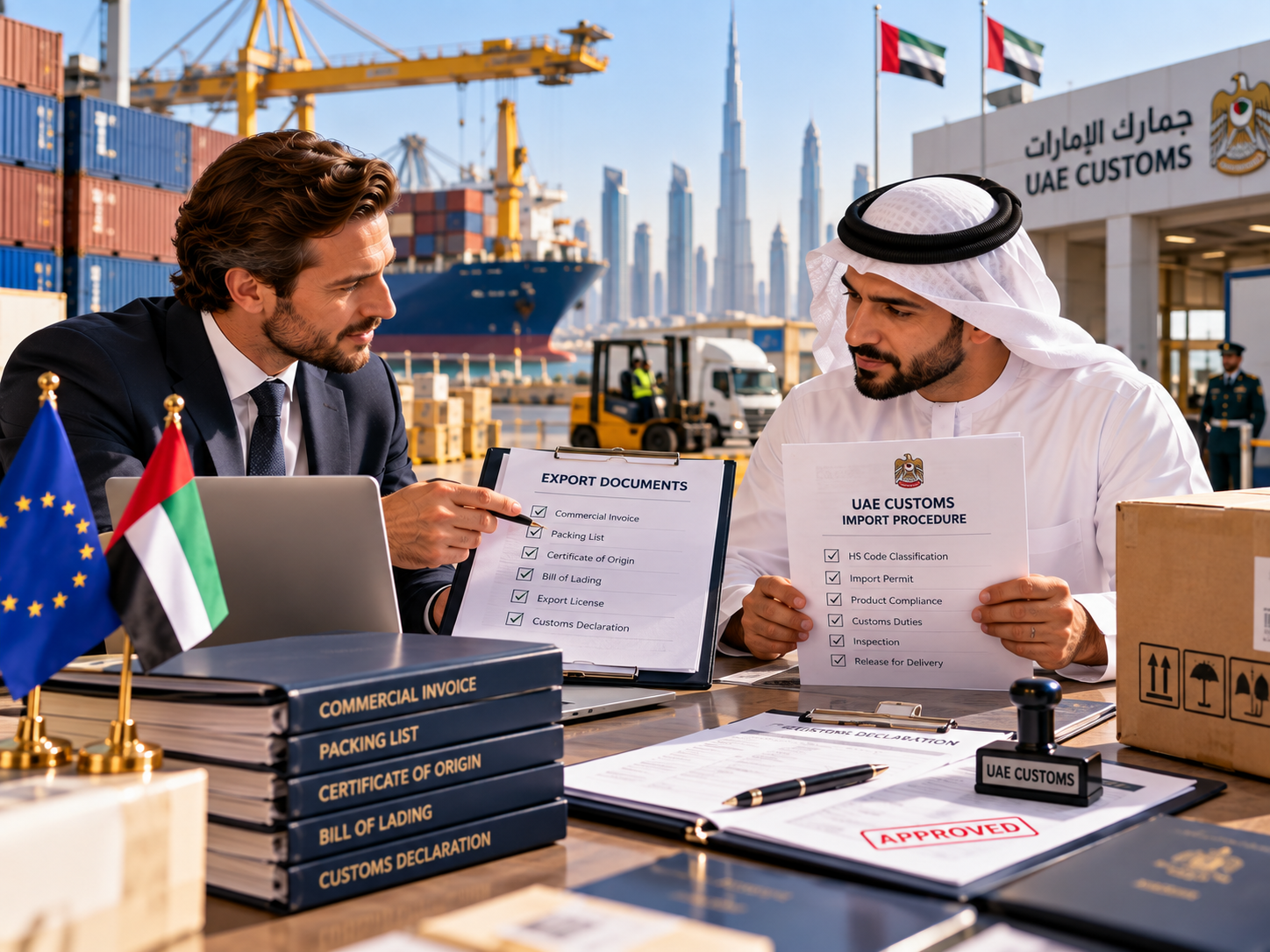
3. Prepare the Required Export Documents
Accurate documentation helps prevent customs delays.
Common documents may include:
Commercial invoice
Packing list
Certificate of origin
Bill of lading or air waybill
Product certificates
Customs documentation
Make sure company names, product descriptions, quantities, and values are consistent across all documents.
4. Find a Reliable UAE Importer or Distributor
A strong local partner can make market entry considerably easier.
Evaluate potential partners based on:
Industry experience
Distribution network
Customer base
Financial stability
Regulatory knowledge
After-sales capabilities
Do not select a distributor based only on promises or the size of its network. Conduct proper due diligence before signing an agreement.
5. Calculate the Complete Export Cost
The final cost should include more than the product price.
Consider:
Manufacturing cost
Packaging
Freight
Insurance
Customs charges
Taxes and applicable fees
Distributor margins
Warehousing
Marketing
Understanding landed cost helps European companies set competitive, sustainable pricing.
6. Choose the Right Shipping and Incoterms
The UAE has well-developed air, sea, and road logistics infrastructure. The appropriate shipping method depends on product size, urgency, value, and destination.
Clearly define responsibilities through suitable Incoterms, including who handles transportation, insurance, customs responsibilities, and risk during delivery.
For larger shipments, experienced freight forwarders and customs brokers can help simplify the process.
7. Build a Long-Term Market Strategy
Successful exporting should not end with the first shipment.
Monitor:
Sales performance
Customer feedback
Distributor performance
Competitor pricing
Regulatory changes
Inventory levels
Once your product gains traction in the UAE, the country can potentially serve as a base for expanding into other GCC markets.
Export to the UAE With Capella Austria
The UAE offers attractive opportunities for European companies, but successful exporting requires preparation, compliance, reliable partners, and effective logistics.
Capella Austria can support businesses with market research, partner identification, sourcing, export coordination, and international business development, helping European companies approach the UAE market with greater confidence and structure.
Frequently Asked Questions
Is the UAE a good market for European companies?
Yes. The UAE has strong international trade connections and demand across many industrial and consumer sectors.
What documents are needed to export to the UAE?
Requirements vary by product, but common documents include commercial invoices, packing lists, certificates of origin, transport documents, and applicable product certificates.
Is Arabic labeling required?
For certain products, Arabic labeling or documentation may be required. Check requirements based on the specific product category.
Do European products need certification?
Some products require specific conformity, safety, or registration documents before import.
Should I find a UAE distributor?
A local distributor can provide valuable market knowledge, customer access, and logistical support, particularly for companies entering the UAE for the first time.
How can I find a reliable UAE business partner?
Use industry networks, trade fairs, business associations, professional research, and conduct proper due diligence before signing an agreement.
What is the best shipping method?
Sea freight is generally suitable for larger shipments, while air freight can be useful for urgent or high-value products.
Can Dubai be used as a regional hub?
Yes. Dubai's logistics infrastructure and international connectivity can make it an attractive base for regional business operations.
How can I reduce export risks?
Verify partners, check regulations, prepare accurate documentation, use clear contracts, and work with experienced logistics providers.
Can Capella Austria help European companies export to the UAE?
Yes. Capella Austria can assist with market research, partner identification, sourcing, and international export coordination.