
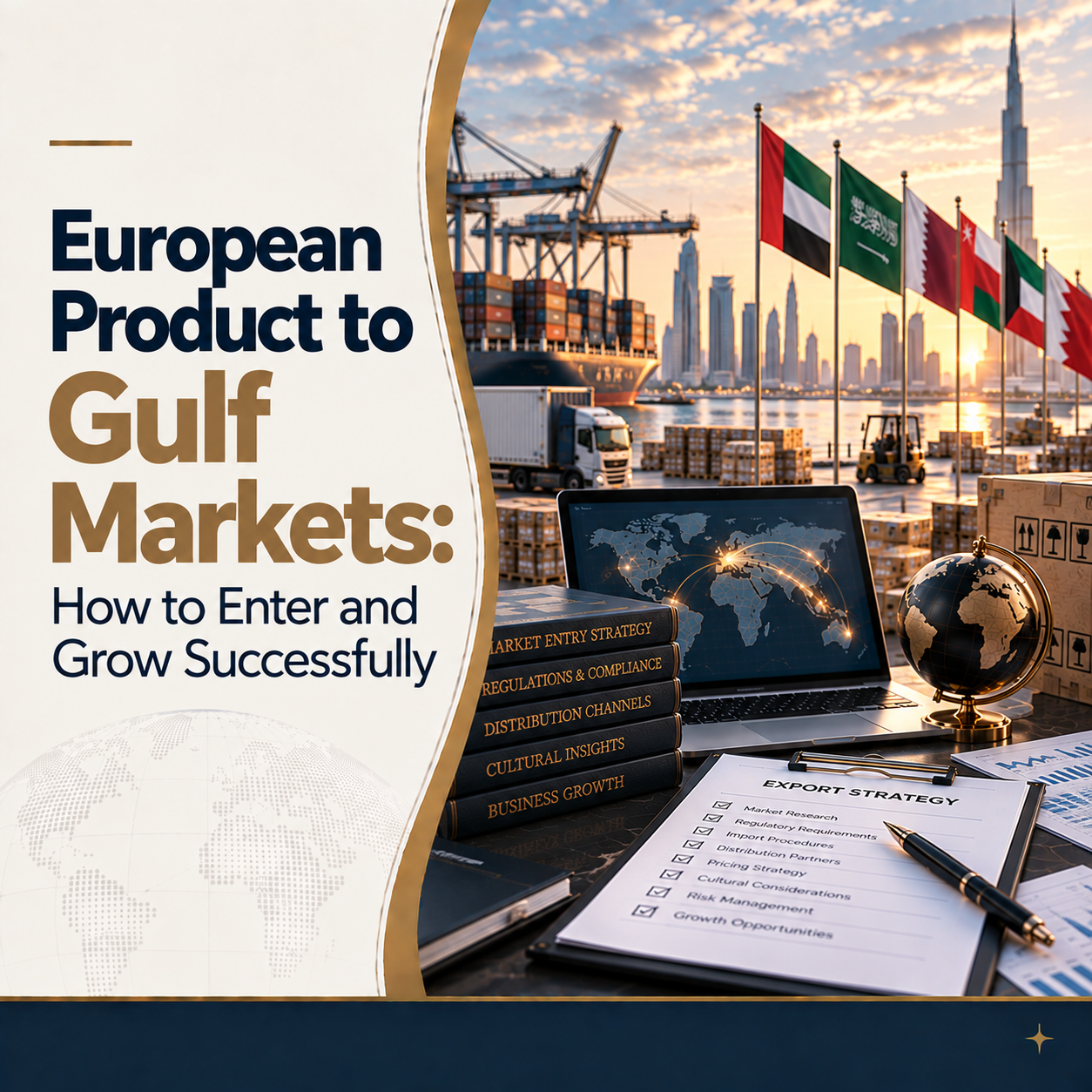
How to Introduce a European Product to Gulf Markets
Introducing a European product to Gulf markets can create significant opportunities for manufacturers and brands seeking international growth. Countries such as the UAE, Saudi Arabia, Qatar, Kuwait, Oman, and Bahrain offer strong demand across sectors including industrial equipment, food, healthcare, technology, cosmetics, and consumer goods.
However, success requires more than simply exporting a product. Businesses need to understand local demand, regulations, distribution channels, pricing, and cultural expectations.

1. Choose the Right Gulf Market
The GCC is not a single uniform market. Each country has different regulations, consumer behavior, competition, and purchasing patterns.
Research factors such as:
Market demand
Competitors
Customer segments
Import requirements
Purchasing power
Local distribution channels
The UAE can be an attractive regional entry point, while Saudi Arabia offers a large consumer and industrial market.
2. Understand Local Regulations
Before exporting, determine whether your product requires registration, certification, testing, labeling, or approval.
Requirements vary by product and destination country. Check:
Import regulations
Product certifications
Labeling requirements
Customs documentation
Safety standards
Product registration
Early regulatory research helps prevent costly customs delays.

3. Adapt the Product to Local Demand
A successful European product may still need adjustments for Gulf markets.
Consider:
Arabic and English labeling
Climate and temperature conditions
Packaging preferences
Local consumer expectations
Product specifications
Cultural considerations
For some products, adaptation can significantly improve acceptance and competitiveness.
4. Find a Reliable Local Partner
A qualified distributor, importer, or commercial partner can simplify market entry.
A good local partner should understand:
Distribution networks
Customer behavior
Regulatory procedures
Local competition
Sales channels
After-sales service
Before signing an agreement, verify the partner's reputation, financial stability, market experience, and existing customer network.

5. Build the Right Pricing Strategy
European products may have a strong reputation for quality, but pricing must remain competitive.
Calculate the complete landed cost, including:
Product cost
Shipping
Insurance
Customs duties
Taxes
Distributor margins
Warehousing
Marketing expenses
Then compare the final retail or B2B price with competing products in the target country.
6. Plan Logistics and After-Sales Service
Reliable logistics are essential for maintaining customer confidence.
Define:
Shipping method
Delivery times
Warehousing
Customs clearance
Inventory levels
Returns and warranty procedures
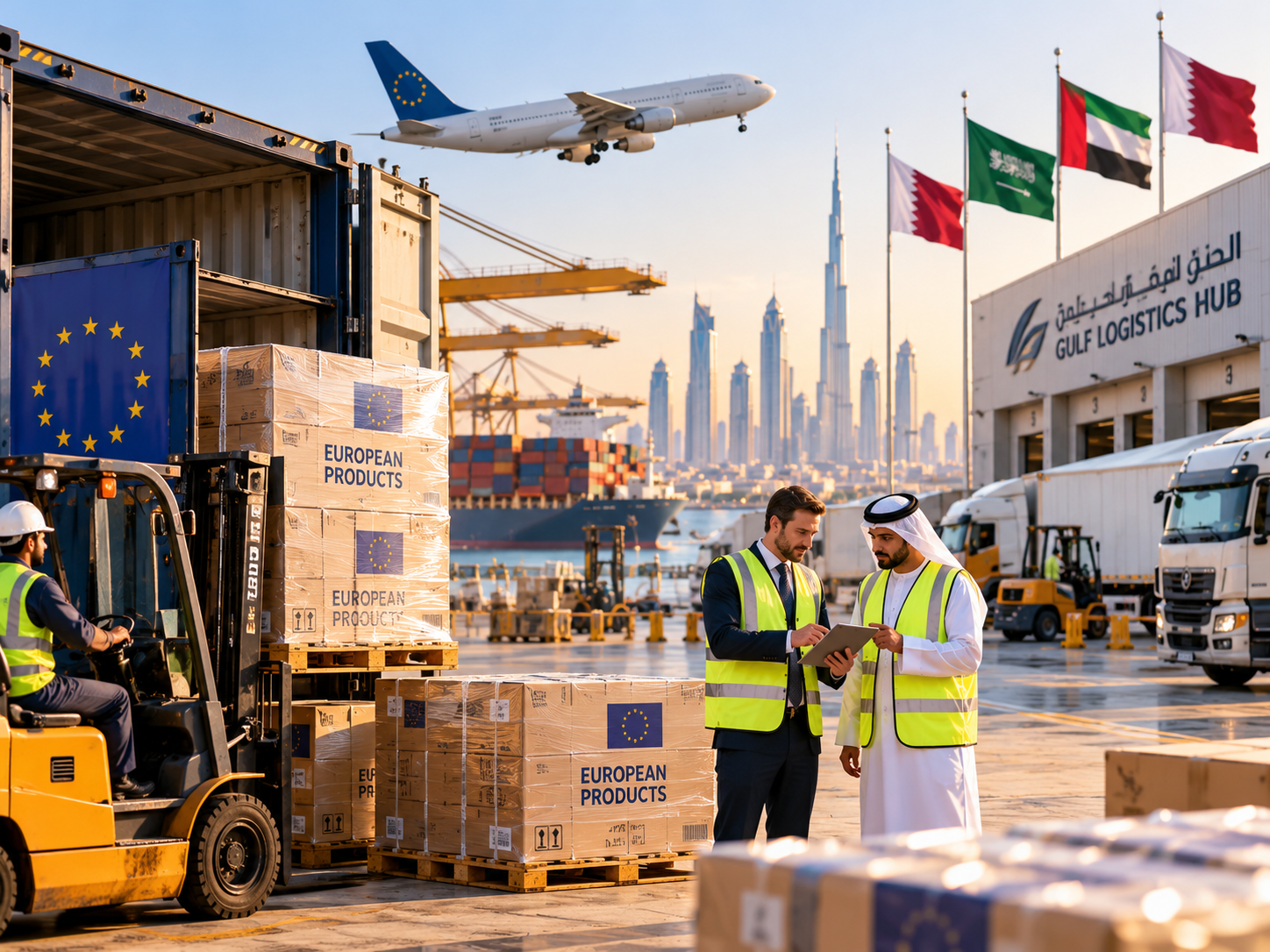
For machinery, industrial equipment, and technical products, local installation, spare parts, maintenance, and technical support can be major competitive advantages.
7. Start With a Controlled Market Entry
Instead of entering several Gulf countries simultaneously, consider testing one market first.
A pilot launch can help you measure:
Customer response
Sales performance
Pricing
Distributor effectiveness
Regulatory challenges
Marketing results
Once the business model works, you can expand to additional GCC markets.
Bring European Products to Gulf Markets With Capella Austria
Entering Gulf markets requires more than a high-quality European product. Successful expansion depends on market research, regulatory preparation, reliable local partnerships, competitive pricing, and professional logistics.
Capella Austria can support European companies and international businesses with market research, partner identification, sourcing, and cross-border business coordination, helping turn European products into sustainable opportunities in Gulf markets.
Frequently Asked Questions
Which Gulf country is best for European products?
It depends on the product and target customers. The UAE and Saudi Arabia are often strong starting points, but you should evaluate market suitability on a case-by-case basis.
Do European products need special certification?
Many products require specific certifications, registration, labeling, or approvals depending on the destination and product category.
Is a local distributor necessary?
Not always, but a reliable local partner can simplify distribution, sales, regulatory processes, and customer support.
Should products be adapted for Gulf markets?
Often yes. Packaging, labeling, language, climate suitability, and customer preferences may require adaptation.
How can I find a Gulf distributor?
Use industry networks, trade fairs, business associations, professional sourcing services, and targeted market research.
Is the UAE a good entry point?
The UAE can provide strong logistics, international connectivity, and access to regional business networks, but the best entry point depends on the product.
What about Saudi Arabia?
Saudi Arabia represents a major GCC market with significant opportunities across consumer, industrial, healthcare, technology, and infrastructure sectors.
How important is Arabic labeling?
For many product categories, Arabic labeling or documentation may be required. Check requirements based on the specific destination and product.
How should I test the market?
Start with a limited launch, pilot distribution, or selected customer segment before committing to large-scale expansion.
Can Capella Austria help with Gulf market entry?
Yes. Capella Austria can support businesses with market research, partner identification, sourcing, and international market-entry coordination.