
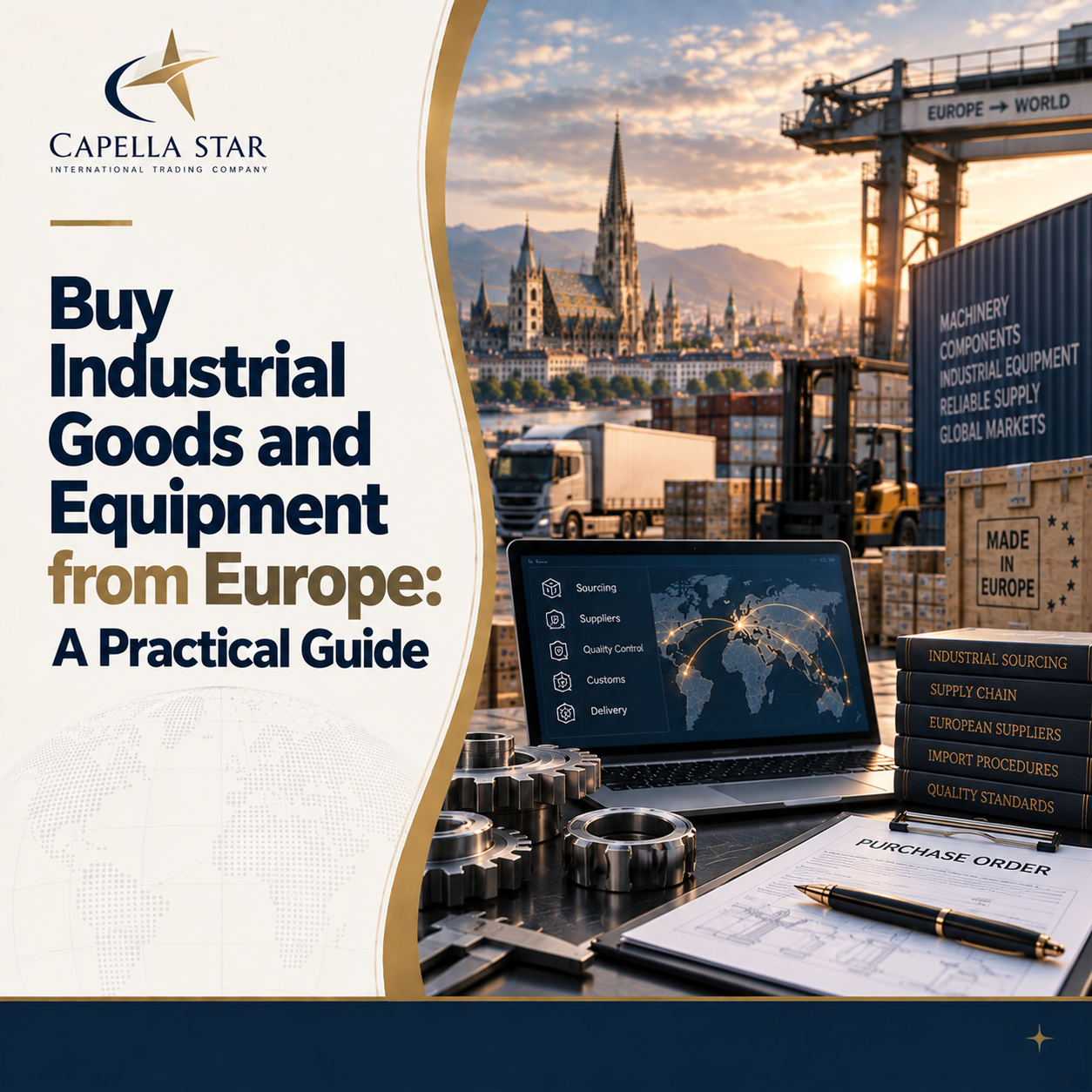
How to Buy Industrial Goods and Equipment from Europe
Buy industrial goods and equipment from Europe to access high-quality machinery, advanced technology, and reliable industrial solutions. However, successful purchasing requires careful supplier selection, technical evaluation, cost analysis, and proper shipping arrangements.
Whether you need production machinery, factory equipment, or specialized industrial components, following a structured process can help reduce risks and improve your purchasing results.
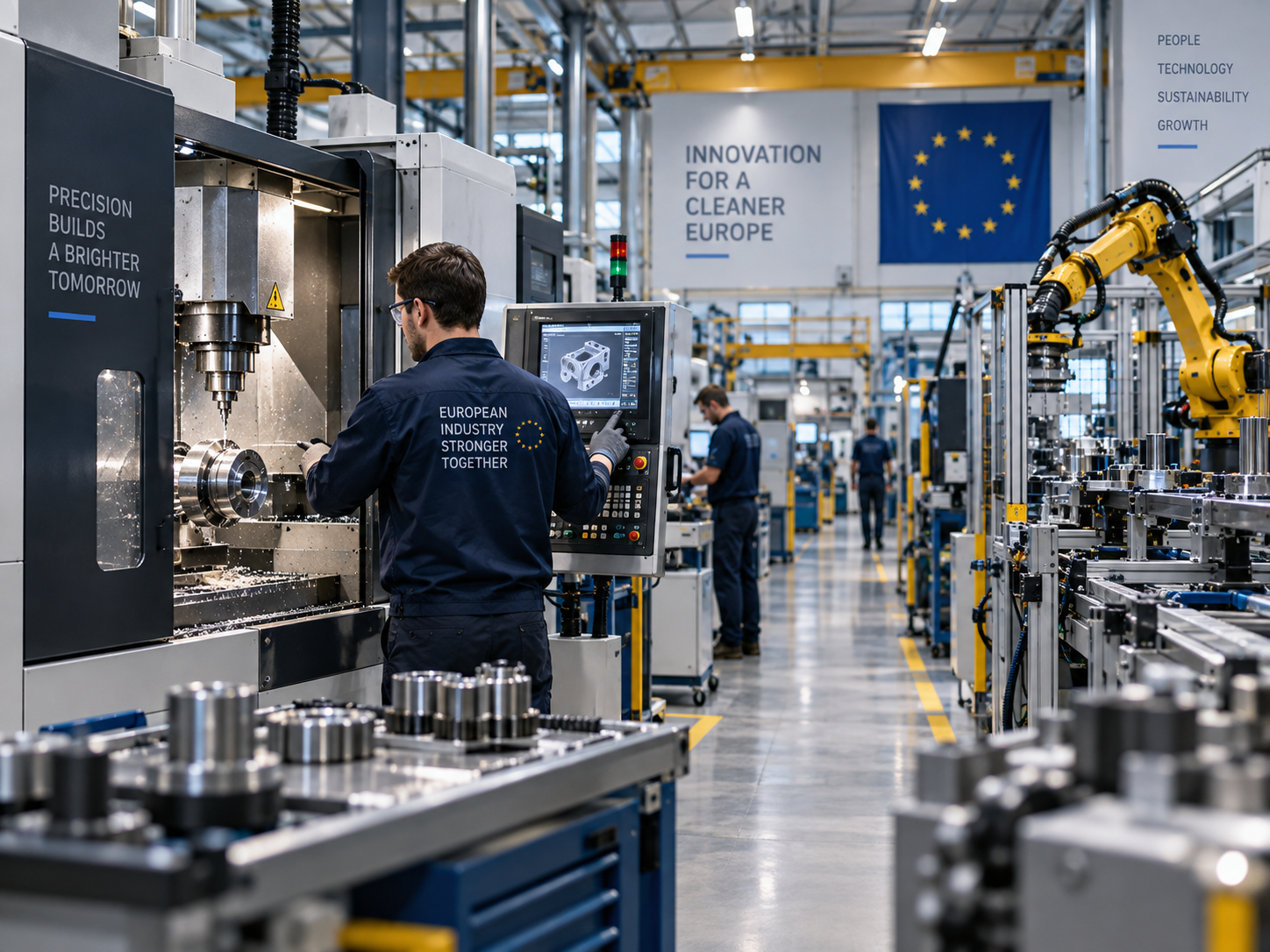
1. Define Your Equipment Requirements
Before contacting suppliers, clearly identify your purchasing needs. Consider:
Equipment type and technical specifications
Required capacity and performance
New or used machinery
Compatibility with existing systems
Required certifications and safety standards
Budget and delivery timeline
A detailed technical specification helps suppliers provide accurate quotations and prevents misunderstandings.
2. Find Reliable European Suppliers
Europe has many established manufacturers and distributors across industries such as engineering, automation, energy, construction, and manufacturing.
You can find suppliers through:
Official manufacturer websites
Industrial trade fairs
B2B marketplaces
Industry associations
Professional sourcing partners
Always review the supplier’s experience, company history, product range, and customer references before proceeding.

3. Verify Supplier Credibility and Product Quality
Supplier verification is one of the most important steps in international purchasing. Request:
Company registration details
Product catalogs and technical documents
Relevant certifications
Customer references
Warranty and after-sales service information
For expensive equipment, consider an independent inspection before shipment. This can help confirm product condition, specifications, and compliance with your requirements.
4. Compare Prices and Total Purchasing Costs
The lowest quotation is not always the most economical option. Calculate the total cost of ownership, including:
Cost Category | What to Consider |
|---|---|
Product price | Equipment or machinery cost |
Transportation | Road, sea, or air freight |
Customs | Duties, taxes, and clearance |
Installation | Assembly and technical setup |
Maintenance | Spare parts and servicing |
Payment | Banking and currency conversion fees |
Comparing complete costs allows you to make a more informed purchasing decision.
[Suggested Image: Industrial equipment being prepared for international shipment]
5. Check European Standards and Import Regulations
Industrial equipment may need to meet specific safety, technical, and environmental requirements. Depending on the product and destination country, relevant documentation may include:
CE marking, where applicable
Technical specifications
Declaration of conformity
Safety instructions
Country-specific import documents
Consult customs professionals or technical experts to confirm the requirements before placing an order.
6. Negotiate Commercial Terms and Delivery
A clear commercial agreement should define:
Product specifications and quantity
Price and payment conditions
Delivery date
Warranty terms
Incoterms
Responsibility for transportation and insurance
Procedures for defective or damaged goods
Use written documentation for all important agreements. This helps reduce disputes and ensures that both parties understand their responsibilities.
7. Arrange Shipping and After-Sales Support
Industrial machinery may require specialized packaging, transportation, and handling. Work with experienced logistics providers to determine the appropriate shipping method.
Also, confirm whether the supplier can provide:
Installation support
Operator training
Spare parts
Technical assistance
Maintenance services
Reliable after-sales support can significantly improve equipment performance over time.
Purchase Industrial Equipment from Europe with Capella Austria
Purchasing industrial goods from Europe requires market knowledge, supplier verification, technical coordination, and efficient logistics. Capella Austria can support businesses in identifying suitable European suppliers and coordinating international purchasing processes.
With the right preparation and professional guidance, companies can access European industrial solutions while managing costs, quality, and delivery risks.
Frequently Asked Questions
Why should I buy industrial equipment from Europe?
European suppliers offer a wide range of industrial machinery, engineering solutions, and equipment manufactured according to relevant technical standards.
How can I verify a European supplier?
Review company registration, certifications, customer references, technical documents, and warranty conditions.
Can I purchase used industrial machinery?
Yes. However, inspect its condition, maintenance history, operating hours, and availability of spare parts before purchasing.
What documents are required?
Documents vary by product and destination but may include invoices, packing lists, technical documents, certificates, and customs paperwork.
How can I reduce purchasing risks?
Define technical requirements, verify suppliers, use written contracts, inspect equipment, and clarify warranty and delivery terms.
Which shipping method should I use?
The best method depends on equipment size, weight, urgency, destination, and transportation budget.
Are European industrial products expensive?
Prices vary by manufacturer, technology, quality, and equipment condition. Compare total costs rather than the purchase price alone.
Can Capella Austria help find suppliers?
Yes. Capella Austria can assist businesses with European supplier identification and international purchasing coordination.
Should I inspect equipment before shipment?
For high-value purchases, independent inspection is recommended to verify condition, specifications, and functionality.
What is the first step in purchasing equipment?
Start by defining your technical requirements, budget, delivery schedule, and target application.